
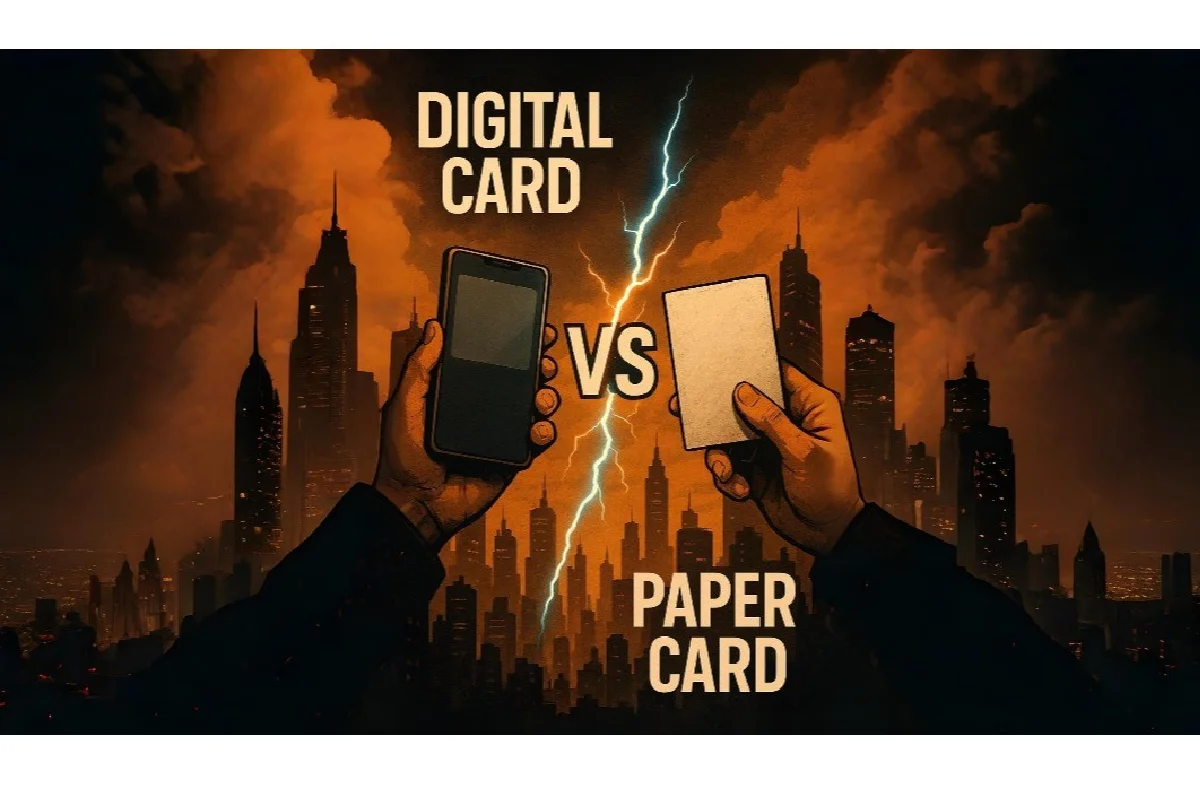
The traditional paper business card exchange—fumbling through wallets, handing over a card that often ends up forgotten in a pocket—is rapidly becoming obsolete. According to recent industry data, 88% of paper business cards are discarded within a week of being received. This stark reality has prompted a significant shift in how professionals share their contact information, with digital business cards emerging as the modern standard for networking.
From Fortune 500 sales teams to independent consultants, professionals across industries are abandoning paper cards in favor of digital alternatives. This transformation isn’t merely about following trends—it represents a fundamental change in how business connections are made, maintained, and leveraged in an increasingly digital world.
Table of Contents
The Environmental and Economic Impact of Paper Cards
The numbers surrounding paper business card waste are staggering. Each year, approximately 10 billion business cards are printed globally, requiring the harvest of roughly 6 million trees. When considering that nearly 9 out of 10 cards are thrown away, the environmental inefficiency becomes clear. This wasteful cycle has prompted environmentally conscious professionals and organizations to seek sustainable alternatives.
Beyond environmental concerns, the economic implications are equally compelling. Traditional business cards carry hidden costs that extend far beyond printing:
- Design and redesign fees when information changes
- Minimum order quantities leading to excess inventory
- Rush shipping charges for last-minute events
- Storage and organization expenses
- Reprinting costs for employee role changes or rebranding
A medium-sized company with 50 employees can easily spend $5,000-$10,000 annually on business cards when factoring in all associated costs. Digital alternatives eliminate these recurring expenses while providing superior functionality.
Instant Updates and Real-Time Information Sharing
One of the most significant advantages of digital business cards is the ability to update information instantly. When a professional changes roles, phone numbers, or email addresses, paper cards become immediately obsolete. Digital cards, however, can be updated in seconds, ensuring that all contacts always have access to current information.
This dynamic updating capability proves particularly valuable for:
- Sales professionals who frequently change territories or product focus
- Consultants working with multiple clients or projects
- Startups and growing companies experiencing rapid change
- Remote workers who may have varying contact preferences
Modern platforms like Wave Connect free digital card take this concept further by allowing professionals to share different versions of their information based on context—showing different details to potential clients versus internal colleagues, for example.
Enhanced Networking Through Technology Integration
Digital business cards transform a simple contact exchange into a rich, interactive experience. Unlike paper cards limited to basic text, digital versions can include:
- Direct links to portfolios, presentations, or product demos
- Calendar scheduling integration for immediate meeting bookings
- Social media profiles and professional networks
- Video introductions or company overviews
- Location information with map integration
The seamless integration with smartphones represents another crucial advantage. Recipients can save contact information directly to their phones in seconds, eliminating the manual data entry required with paper cards. This immediate accessibility significantly increases the likelihood of follow-up communication and relationship building.
Analytics and Engagement Tracking
Digital cards provide something paper never could: measurable insights. Professionals can track when their card was viewed, which links were clicked, and how contacts engaged with their information. This data proves invaluable for:
- Sales teams measuring lead engagement
- Marketing professionals tracking campaign effectiveness
- Recruiters understanding candidate interest levels
- Entrepreneurs validating business development efforts
Security and Professional Control
Contrary to common assumptions, digital business cards often provide superior security compared to paper alternatives. Once a paper card is handed out, the recipient has permanent access to that information, regardless of any future changes in the professional relationship. Digital cards offer granular control over information sharing.
Enterprise-grade platforms implement robust security measures including:
- SOC 2 Type II certification for data protection
- Ability to revoke access to shared information
- Encrypted data transmission
- Compliance with international privacy regulations
For organizations managing large teams, digital solutions enable centralized control over employee information sharing, ensuring brand consistency while maintaining security protocols.
Implementation Strategies for Organizations
The transition from paper to digital cards requires thoughtful implementation, particularly for larger organizations. Successful adoption typically follows these best practices:
Phased Rollout Approach
Rather than forcing immediate adoption across all departments, organizations find success with gradual implementation. Starting with tech-forward teams or frequent networkers creates internal champions who can demonstrate value to colleagues. Sales teams often serve as ideal pilot groups, given their constant need for updated materials and networking tools.
Training and Support Systems
While digital natives may embrace the technology immediately, comprehensive training ensures all team members can leverage the full capabilities of digital cards. This includes:
- Basic sharing techniques for different scenarios
- Customization options for personal branding
- Analytics interpretation and follow-up strategies
- Integration with existing CRM and communication tools
Platforms that offer bulk deployment capabilities, such as Wave Connect which enables organizations to create and distribute 200 cards in just 5 minutes through Excel import, significantly streamline the onboarding process for large teams.
The Future of Professional Networking
The shift toward digital business cards represents more than a technological upgrade—it signals a fundamental change in professional networking practices. As remote work becomes permanent for many organizations and virtual meetings replace in-person conferences, the ability to share contact information digitally becomes essential rather than optional.
Emerging trends in digital networking include:
- AI-powered networking recommendations based on shared connections
- Augmented reality business card experiences
- Blockchain verification for professional credentials
- Voice-activated card sharing through smart assistants
The integration with digital wallets represents another significant advancement. Apple Wallet and Google Wallet compatibility means professionals can store and share their digital cards alongside payment methods and tickets, ensuring their networking tools are always accessible.
As businesses continue to prioritize sustainability, efficiency, and data-driven decision making, the adoption of digital business cards will only accelerate. Organizations that embrace this transition position themselves as forward-thinking leaders while providing their teams with tools that enhance rather than hinder professional relationships. The question is no longer whether to adopt digital business cards, but how quickly organizations can implement them to maintain competitive advantage in an increasingly digital marketplace.