
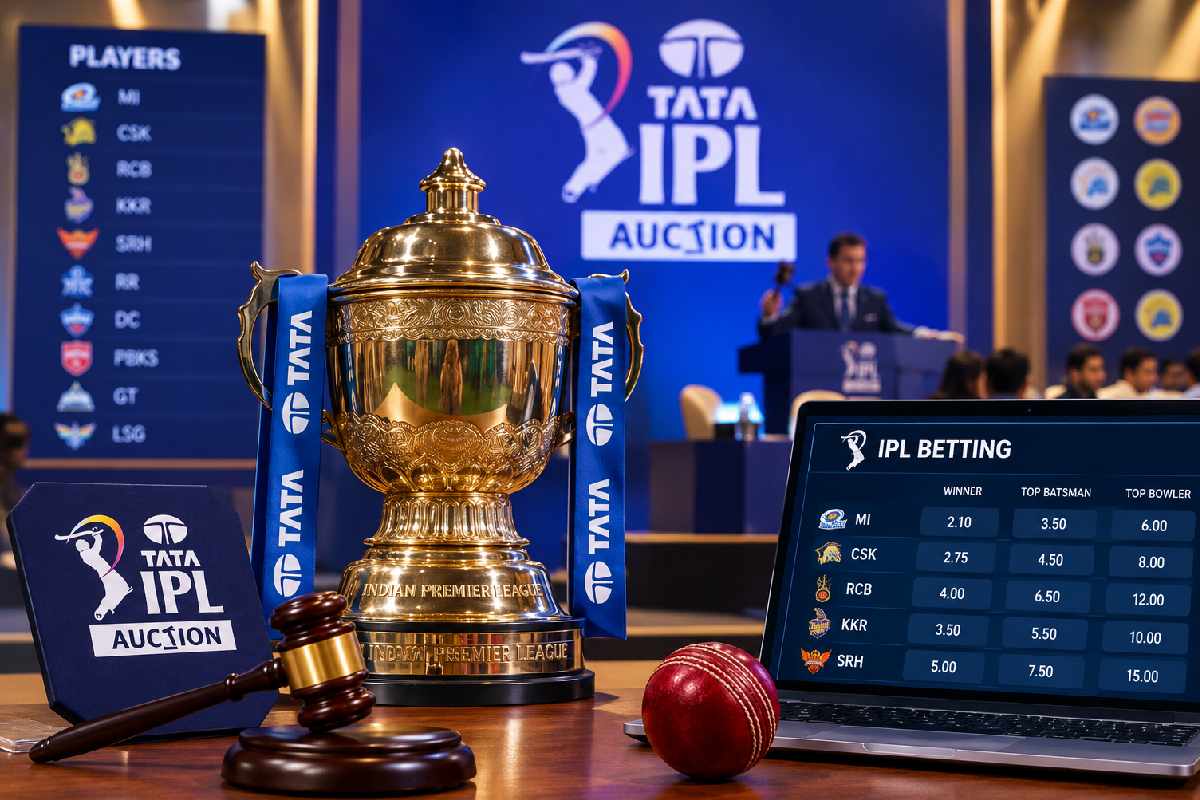
Every IPL season is shaped months before a ball is bowled. Through retentions, trades and the auction itself, franchises rebuild their squads, and the balance of the competition shifts as a result. For fans, the auction is entertainment. For anyone betting on the season ahead, it is one of the most important information events of the year.
This guide explains how the auction cycle works, what actually determines whether a squad has improved, why early-season markets often lag behind the reality of squad changes, and what to look for when the new squads are finally settled.
Table of Contents
How the Auction Cycle Works
The IPL operates on a cycle of larger and smaller auctions. In a mega-auction year, most players return to the pool and franchises rebuild almost from scratch, keeping only a limited number of retained players. In the seasons between, a mini-auction lets teams fill gaps and adjust rather than start again.
Before any auction, franchises decide which players to retain and which to release. That retention deadline is itself informative — it tells you which players each franchise considers central to its plans and how much budget each has left for the auction.
For the 2027 season the auction is expected to be a mini-auction held in December, with retentions decided beforehand. Exact dates are set by the league and can move, so they are worth confirming nearer the time.
Why Squad Changes Matter More Than Star Names
Auction coverage tends to focus on the biggest purchases — the record fees and headline signings. Those matter, but they are often less important than the less glamorous question of whether a squad is balanced.
A T20 side needs specific roles filled: openers who can use the powerplay, middle-order batters who handle spin, a finisher, death bowlers, and a spin attack that can control the middle overs. A franchise that spends heavily on two famous batters but fails to replace a departed death bowler may be weaker overall, even if the headlines suggest otherwise.
The overseas player limit adds another constraint. Only a set number of overseas players can take the field in each match, so a squad packed with overseas talent may not be able to use all of it. The quality of the domestic core often matters more than the headline overseas names.
Reading Squad Balance
When squads are finalised, a useful exercise is to sketch each team’s likely playing eleven and look for gaps rather than strengths. Is there a genuine death bowling option? Does the side have more than one quality spinner? Can the middle order handle a slow surface? Is there cover if a key player is injured?
Depth matters over a long season. Injuries, international commitments and loss of form all take their toll, and sides with capable replacements for their most important roles are better placed than sides whose first-choice eleven looks strong but whose bench is thin.
Home venue also matters. Franchises play half their league matches at home, and a squad built for their home conditions — spin-friendly, pace-friendly, high-scoring — has an advantage that is easy to overlook when comparing squads in the abstract.
The practical side is straightforward. Season-long and match markets are available on most exchange accounts, so choosing a cricket ID that suits how you bet is a separate question from the analysis itself. The work that matters happens between the auction and the first match, when squads are known but markets have not yet fully absorbed them.
Why Early Markets Often Lag
Outright prices for a new season are often shaped by reputation — how a franchise performed in recent seasons, how famous its players are, how much attention it receives. Those factors can take time to adjust to what a new squad actually looks like.
A side that finished near the bottom but rebuilt intelligently may still be priced as if it were the same team. A former champion that lost key players may still carry a price based on past success. These gaps tend to narrow once the season starts and results begin to reflect real squad strength.
That makes the period between the auction and the opening matches unusually interesting for anyone willing to do the squad analysis. It is one of the few times when careful, publicly available work can reveal something the market has not yet fully priced.
Retentions as Signals
Retention decisions deserve more attention than they usually get. A franchise that releases an established player is making a statement about its plans, its budget or its view of that player. A franchise that retains a young uncapped player over an experienced one is signalling confidence in development.
Released players also matter. A strong player released by one franchise will be available to others, and where they end up can change the balance of two squads at once. Following the flow of released players through the auction is often more informative than following the headline purchases.
Taken together, retentions and releases show how each franchise sees its own strengths and weaknesses — useful information before a single match has been played.
Mistakes to Avoid
The first is overvaluing headline signings. A big purchase generates attention but may not fill the role a team most needed. The second is ignoring the overseas limit and assuming every expensive overseas player will feature regularly.
The third is forming a firm view too early. Injuries, availability and late withdrawals can change a squad between the auction and the season. A view formed on auction day should be revisited once the squads are genuinely settled and availability is clearer.
The fourth is forgetting that the competition is long. A squad that looks weaker on paper may improve through the season as young players develop, while a squad built around ageing stars may fade. Season-long markets reward thinking about the whole campaign, not just the opening weeks.
What to Watch in the First Two Weeks
The opening fortnight of a season is when squad analysis meets reality. It is worth watching with specific questions in mind rather than simply following results. Which new signings are actually being picked? Which retained players have kept their places? Is a side using the playing eleven you expected, or has team management chosen differently?
Early results should be treated carefully. Two or three matches are a small sample, and a strong squad can lose early while a weaker one wins. What matters more is whether the way a side is playing matches the strengths and weaknesses identified before the season. A team losing close matches because of poor death bowling may well be the team you expected to struggle at the death — and the market may still be catching up.
Watch how markets move over these weeks. Prices for season-long outcomes often shift quickly after the first few rounds as reputation gives way to evidence. Anyone who did the squad analysis before the season can compare those movements against their own view and see where the market has adjusted too far and where it has not adjusted enough.
Injuries and Availability Through the Season
Squad strength on paper assumes everyone is available. Over a long competition that assumption rarely holds. Injuries, international commitments and workload management all reduce the players a franchise can actually use, and those absences tend to fall unevenly across teams.
Franchises with depth in their most important roles cope far better than those relying on a single player in a key position. A side with only one genuine death bowler is exposed to a single injury in a way a side with two or three options is not. That fragility is visible from the squad list before the season starts, and it is one of the more reliable things squad analysis can reveal.
Frequently Asked Questions
Why does the IPL auction matter for betting? Because it reshapes squads, and early-season markets often take time to reflect those changes. The gap between reputation and actual squad strength can be informative.
What matters more, star signings or squad balance? Usually balance. A side needs specific roles filled — death bowling, spin, a finisher — and a gap in a key role can outweigh a headline signing.
What is a mini-auction? An auction held between mega-auction years, where franchises fill gaps rather than rebuild. Most players stay with their teams and only released players enter the pool.
How do retentions help? They show how each franchise sees its own strengths, how much budget remains, and which players it considers central. Released players can shift the balance of other squads.
When should I form a view on the new season? After squads are settled and availability is clearer. A view formed on auction day should be revisited as injuries and withdrawals become known.
A Note on Responsible Play
Season-long markets tie up money for weeks, and a long competition offers many opportunities to bet more than you planned. Decide a budget for the whole season in advance, keep stakes consistent, treat betting as entertainment rather than income, and never chase a loss. Use the deposit limits reputable platforms provide. Betting rules differ from state to state in India and continue to change, so check the current position where you live, and only bet if you are of legal age.