
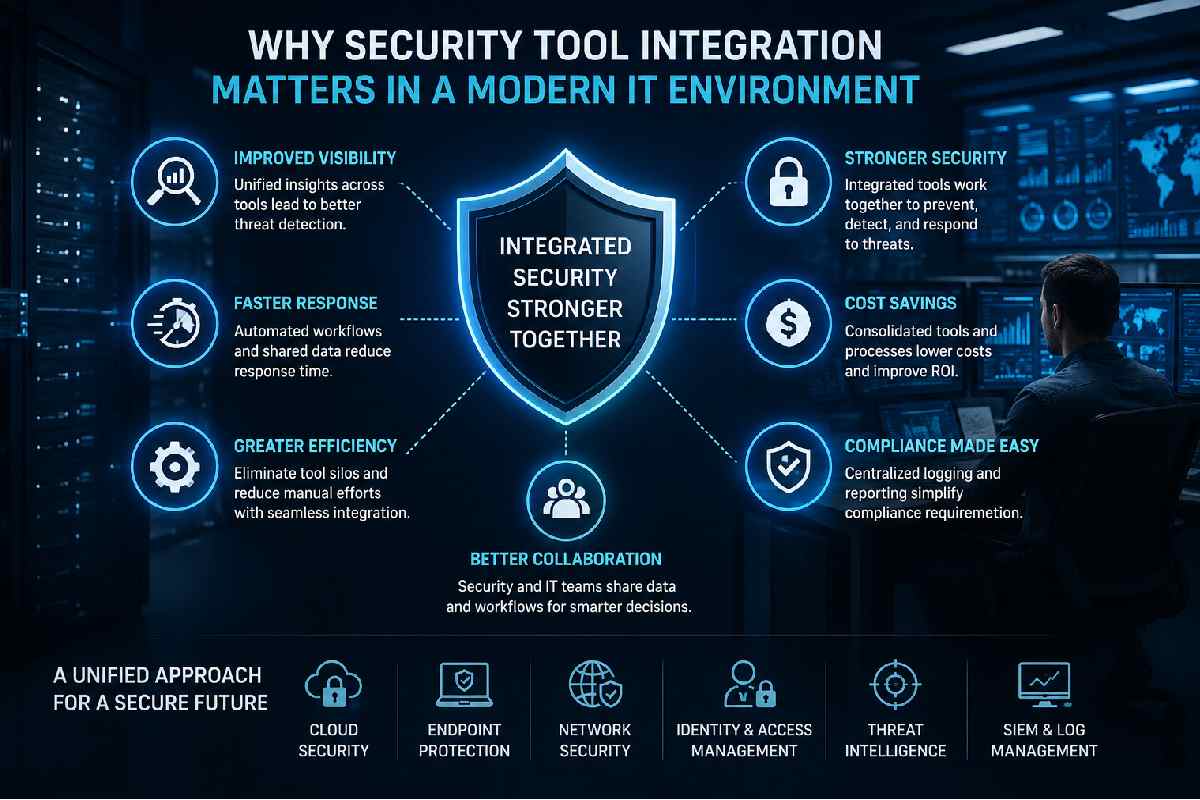
Modern businesses rely on an increasingly diverse collection of technology. Cloud platforms, employee devices, business applications, and identity systems can all play an important part in everyday operations. While these technologies bring considerable benefits, they can also make the IT environment more difficult to secure.
Security teams often use multiple tools to protect different areas of the organization. The challenge is ensuring these tools work together effectively. Continue reading to discover how better integration can give businesses a clearer understanding of activity across their systems while helping teams identify and respond to potential threats more efficiently.
Table of Contents
Creating Better Security Visibility
One of the biggest challenges associated with a complex IT environment is visibility. A security tool may provide useful information about one particular system, but that information becomes less valuable when viewed entirely in isolation.
Integration allows data from different sources to be brought together. This can help teams understand the wider context surrounding unusual activity rather than analyzing individual alerts without knowing what is happening elsewhere.
For example, approaches to SIEM cyber security can involve collecting and analyzing information from numerous parts of an organization’s technology environment. Bringing security information together can make it easier to recognize patterns that may otherwise be overlooked.
Reducing Security Silos
Businesses frequently add new security products as their requirements change. Over time, this can result in separate tools for endpoints, networks, cloud environments, and identity management. When these products operate independently, employees may need to switch between several dashboards to investigate an issue. Information can become fragmented, making investigations slower and potentially creating gaps in understanding.
Integrating security technologies helps reduce these silos. Instead of treating every alert as an isolated event, teams can build a more complete picture of what is happening across the organization.
Supporting Faster Investigations
Speed can make a significant difference when dealing with a potential cyber incident. Security teams need to establish whether an alert represents a genuine threat and determine what action should be taken.
Integrated systems can provide additional context without requiring employees to manually gather information from numerous platforms. An unusual login, for instance, may become more meaningful when considered alongside activity from an employee’s device or changes within a cloud application. Reducing the amount of manual investigation can help teams focus their attention on incidents that genuinely require action.
Making Automation More Effective
Integration can also support security automation. When tools can exchange information, certain routine responses can be carried out more efficiently. Automated processes might help categorize alerts, collect relevant information, or initiate predetermined responses. This can be particularly valuable for organizations with smaller security teams that cannot manually investigate every notification. Automation still requires appropriate oversight, but connecting technologies can make it considerably more useful.
Managing a Changing IT Environment
Modern IT environments rarely remain static. Businesses adopt new cloud services, employees work from different locations, and technology requirements change as organizations grow. Security strategies therefore need to adapt. When choosing new tools, businesses should consider how well they integrate with existing systems rather than evaluating individual features alone.
Effective integration can help organizations maintain visibility as their technology environments become more complex. By connecting security information, reducing silos, and supporting faster investigations, businesses can build a security approach that is easier to manage and better prepared for future growth.