Technology has transformed the way businesses operate. From cloud-based applications and artificial intelligence to digital payments and remote collaboration, modern companies rely on technology for almost every part of their daily operations.
But greater reliance on technology also creates new risks.
A technical outage can interrupt business operations. A cyberattack can expose sensitive information. A software failure can delay critical processes, while poor data management can create financial and regulatory challenges. As these risks continue to evolve, businesses need a more modern approach to risk management.
Table of Contents
Technology Has Changed the Risk Landscape
Traditional business risks such as property damage, workplace accidents, equipment failure, and liability still matter. However, companies now face risks that may not have existed at the same scale a decade ago.
Businesses increasingly depend on:
- Cloud infrastructure
- Digital customer platforms
- Online payment systems
- Artificial intelligence tools
- Connected devices and IoT systems
- Third-party software providers
- Remote work technologies
- Digital communication and collaboration tools
Each technology can improve efficiency, but it can also introduce vulnerabilities.
For example, a business that moves its operations to the cloud may reduce infrastructure costs, but it still needs to consider data security, access controls, service interruptions, and third-party dependencies.
This is why technology should no longer be viewed separately from business risk management.
Cybersecurity Is Now a Business Risk
Cybersecurity is one of the clearest examples of how technology has changed business risk.
Cyberattacks can affect companies of all sizes. A successful attack may result in stolen customer information, operational downtime, financial losses, reputational damage, or costly recovery efforts.
Small and medium-sized businesses can be particularly exposed because they may have fewer resources available for cybersecurity and incident response.
Businesses can reduce their exposure by implementing basic security measures such as:
- Multi-factor authentication
- Regular software updates
- Employee security training
- Strong password policies
- Data backups
- Access controls
- Incident response planning
However, cybersecurity is only one part of a broader risk strategy.
The Growing Role of AI
Artificial intelligence is introducing another layer of complexity.
Businesses are using AI for customer service, marketing, data analysis, fraud detection, content creation, software development, and many other tasks. These applications can improve productivity, but they also create new questions around data privacy, accuracy, intellectual property, security, and compliance.
For example, employees may unknowingly enter confidential business information into an AI platform. An organization may also rely on AI-generated information without properly verifying its accuracy.
Companies adopting AI should therefore establish clear internal policies covering how employees can use AI tools, what information can be shared, and where human review is required.
Technology Can Also Improve Risk Management
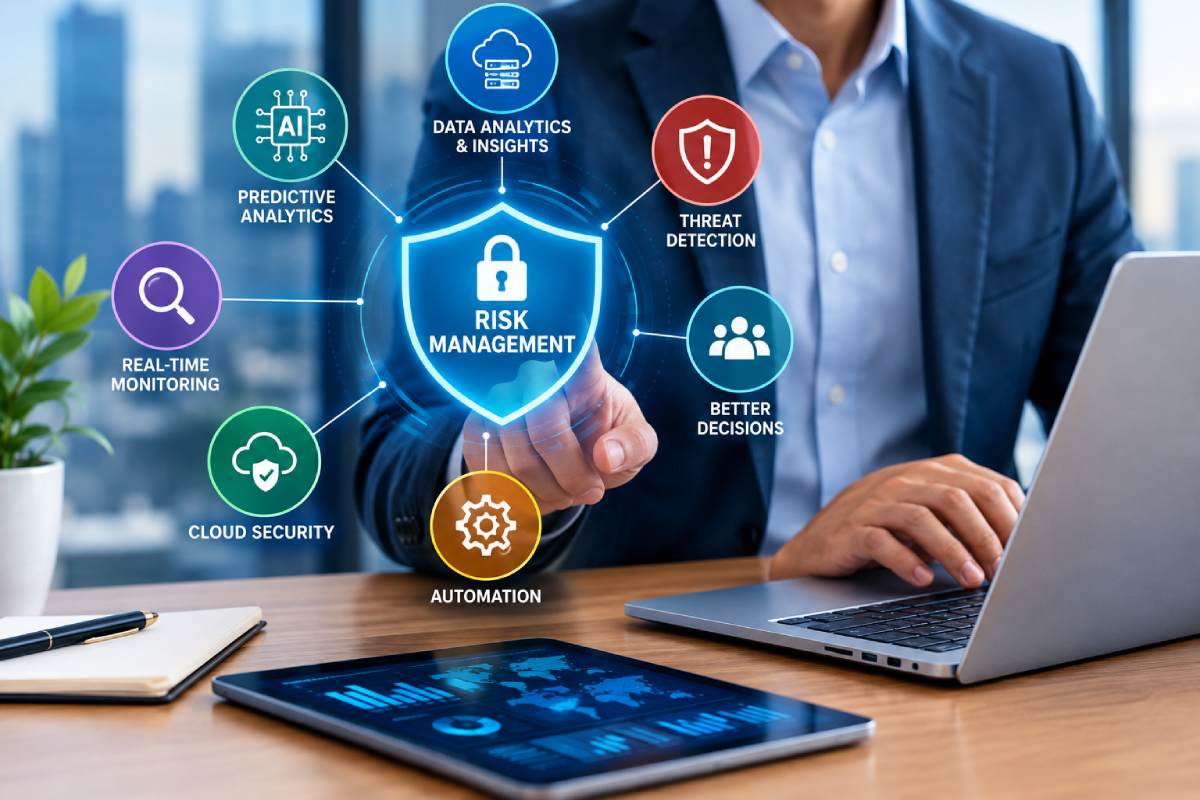
The relationship between technology and risk isn’t entirely negative. Technology can also help businesses identify and manage risks more effectively.
Data analytics can help organizations identify patterns that may indicate potential problems. Automated monitoring systems can detect unusual activity, while cloud-based tools can make it easier for teams to maintain documentation and coordinate responses.
Businesses can also use digital tools to evaluate operational processes and identify areas where a failure could have significant financial consequences.
The key is to understand both sides of the equation: technology can create risks, but it can also provide better tools for managing them.
Insurance and Technology Risk
Technology-related risks have also changed the way businesses think about insurance.
Traditional business insurance can address risks such as property damage, liability, and business interruption, while specialized coverage may be relevant to particular industries or emerging exposures.
For businesses dealing with digital threats, cyber insurance can be another component of a broader risk-management strategy. Coverage needs vary depending on the organization’s size, industry, operations, and risk profile, so businesses should evaluate their specific exposures rather than assuming one policy fits every situation.
For Canadian businesses reviewing their overall protection strategy, working with an experienced insurance provider can help connect operational risks with appropriate coverage. Companies can explore options such as business insurance solutions from QubeRisk as part of that process.
Insurance, however, should complement—not replace—strong security practices and operational controls.
Third-Party Technology Creates Additional Risks
Modern businesses rarely operate entirely on their own systems.
They often depend on payment processors, cloud providers, software vendors, marketing platforms, logistics companies, IT service providers, and other third parties.
This creates supply-chain and vendor risks.
If an important service provider experiences a security incident or extended outage, the impact can reach the businesses that depend on that provider.
Companies should therefore consider third-party risk when developing their technology strategy. Reviewing vendor security practices, understanding contractual responsibilities, maintaining contingency plans, and identifying alternative providers can all help reduce potential disruption.
Business Continuity Matters More Than Ever
Technology failures don’t always involve cyberattacks.
A cloud outage, hardware failure, software problem, power interruption, or network disruption can temporarily prevent employees from accessing important systems.
A business continuity plan can help organizations respond more effectively when something goes wrong.
A useful plan should identify:
- Critical business functions
- Essential technology systems
- Key personnel and responsibilities
- Backup and recovery procedures
- Communication methods
Alternative ways to continue important operations
Businesses should also test their plans periodically rather than treating them as documents that only need to exist.
Building a Modern Risk Management Strategy
Managing technology-related risk doesn’t require eliminating every possible threat. Instead, businesses should identify their most important exposures and determine how to reduce, transfer, or prepare for them.
A practical approach can include four steps.
- Identify the Risks
Start by understanding which technologies the business relies on and what could happen if those systems fail, become unavailable, or are compromised.
- Assess the Potential Impact
Not every risk has the same consequences. Businesses should consider financial losses, operational disruption, customer impact, legal obligations, and reputational damage.
- Put Controls in Place
Security measures, employee training, backups, access controls, vendor reviews, and continuity plans can reduce the likelihood or impact of many technology-related incidents.
- Review Insurance and Recovery Options
Some risks may remain even after reasonable preventive measures are implemented. Businesses should regularly review their insurance and recovery strategies to make sure they remain appropriate as the organization changes.
The Future of Business Risk Management
Technology will continue to evolve, and so will the risks associated with it.
AI, automation, connected devices, cloud computing, and other emerging technologies will create new opportunities while introducing new challenges. Businesses that treat technology risk as part of their overall management strategy will be better positioned to respond when unexpected problems occur.
The goal isn’t to avoid technology. It’s to understand the risks that come with it and build a strategy that combines prevention, preparedness, and appropriate financial protection.
For modern businesses, effective risk management is no longer simply about protecting physical assets. It is about protecting the systems, data, people, operations, and relationships that keep the business running.
Conclusion
Technology has fundamentally changed the way businesses operate—and with that change comes a new and evolving range of risks. From cybersecurity threats and data breaches to AI-related concerns, system failures, cloud outages, and third-party dependencies, businesses must look beyond traditional risks when developing their risk management strategies.
At the same time, technology provides businesses with powerful tools to identify, monitor, and respond to potential threats. Strong cybersecurity practices, employee training, data protection, business continuity planning, vendor management, and appropriate insurance coverage can help organizations become more resilient.
The most effective approach is not to avoid technology, but to understand the risks associated with it and prepare accordingly. By regularly assessing their technology-related exposures and combining prevention, preparedness, and financial protection, businesses can reduce potential disruptions and respond more confidently when unexpected events occur.
As technology continues to evolve, businesses that make risk management a central part of their technology strategy will be better positioned to protect their people, data, operations, customers, and long-term growth.
Frequently Asked Questions
- How is technology changing business risk management?
Technology has expanded the types of risks businesses need to manage. In addition to traditional risks such as property damage and liability, businesses now need to consider cybersecurity threats, data breaches, system failures, cloud outages, AI-related risks, and third-party technology dependencies.
- What are the biggest technology risks for businesses?
Some common technology-related risks include cyberattacks, data breaches, system outages, software failures, weak access controls, data loss, third-party vendor incidents, and misuse of artificial intelligence. The level of risk depends on a business’s industry, size, technology infrastructure, and operations.
- Why is cybersecurity important for modern businesses?
Cybersecurity helps protect business systems, sensitive information, customer data, and daily operations from unauthorized access and attacks. A cybersecurity incident can potentially cause financial losses, operational disruption, reputational damage, and other business consequences.
- How can small businesses reduce technology-related risks?
Small businesses can take practical steps such as enabling multi-factor authentication, regularly updating software, training employees, maintaining secure backups, limiting access to sensitive information, using strong password policies, and creating an incident response and business continuity plan.
- How does artificial intelligence create new business risks?
AI can introduce risks related to data privacy, inaccurate information, intellectual property, security, and compliance. Businesses should establish clear guidelines for AI use, including what information employees can share with AI tools and when human review is required.
- Can technology help businesses manage risk?
Yes. Technology can also be used to manage and reduce risk. Data analytics, automated monitoring, security tools, backup systems, and digital business continuity solutions can help businesses identify potential problems and respond more efficiently.