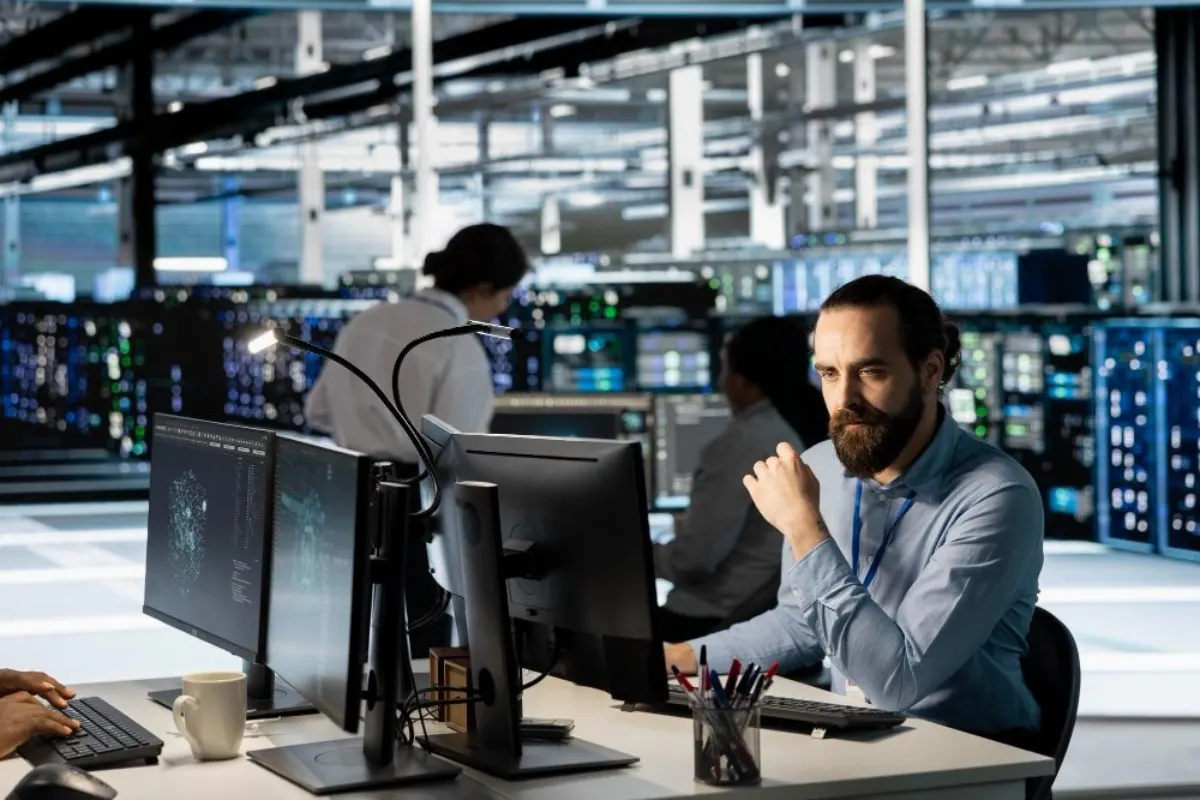
It is safe to assume that for any enterprise, hardware and software are never upgraded at the same rate. Software sees quick updates that can be implemented instantly. On the other hand, hardware changes are slow. Additions and replacement of parts are done, but the core remains the same.
As a result, you often end up with legacy hardware two or even three decades old, with various problems that you face. Modernization becomes a necessity rather than just a choice. What is the best way to do it? Why? We explain it all here.
Table of Contents
How Can Staying with the Same Hardware be Challenging?
When your hardware infrastructure gets outdated, you encounter numerous challenges that start small and slowly become worse. These include the following:
- You encounter performance limitations. Speed is reduced, accuracy is affected, and efficiency is compromised, which increases with time.
- Unplanned downtime becomes the biggest problem. It slowly becomes profound, with many hours of outage several times in a few months.
- It ultimately leads to total system failure, when you are left helplessly scrambling for a solution to prevent work from stopping.
- Spare parts are hard to procure, and so are technical experts. They are also more expensive and take time to obtain.
- Compatibility with modern systems is low, making integration difficult. Data silos are a common occurrence too.
- Cybersecurity is insufficient, as modern security tools cannot scan legacy systems properly. They cannot match with the requirements of modern compliance standards either.
- The loss of both customers and revenue makes it hard to operate the organization itself.
- The opportunity cost of maintaining legacy hardware is very high, taking away most of your resources and limiting innovation.
- Disaster recovery plans fall short, even though it is extremely necessary now, with geopolitical tensions around.
- Sustainability is a major issue, increasing the energy footprint along the way with intense power consumption, cooling requirements, e-waste, etc.
Options for Organizations with Outdated Hardware
Any enterprise with aging hardware has three options when it comes to modernization. They are:
Status Quo
An enterprise can decide to stay with their original, legacy hardware. If they want more time before they go for full-scale modernization, this is a logical choice. However, it will be more expensive and time-consuming to operate the aging hardware.
Full Migration
The next choice is to go for a full-scale migration. While such a move gives you access to modern hardware that you choose based on your requirements, there are hurdles. The process will require several technical specialists, continue for almost or over a year, with ROI taking some time to pick up, and employees needing to train.
Hardware Emulation
Want a perfect in-between? Then, go for emulation. A hardware emulator is a software that creates a layer of translation between the original software and the modern system. The software still thinks the original hardware is running the entire system.
What is Hardware Emulation?
Hardware emulation, as we mentioned, makes the legacy software think that the original hardware is operating it, when it is the modern hardware system actually running the show. A translator or interpreter does the trick of creating its alias.
The original software system sends instructions to what it thinks is the original hardware. What it actually goes to is the emulator, which translates the code to the native equivalent. This is then read by the modern processor and executed.
Although hardware emulation is of two types (interpretation and binary translation), what emulators now use is a hybrid form. This saves time and executes operations at near-native speeds while maintaining accuracy.
Advantages of Hardware Emulation
Hardware emulation is the best way to reproduce the original effects of the legacy hardware while reaping the benefits of modern systems. Here’s how:
- You now get to operate the aging system with the same level of performance and efficiency as the modern hardware you are using.
- You save the cost of maintenance of a system that is years old, be it for the replacement parts or the technical experts.
- Power consumption is lower too, as are the cooling requirements. This saves energy costs a lot.
- You can now add new hardware or extensions with the space you just saved.
- Your software may technically operate on different hardware, but it behaves exactly like before.
- No staff training is required, as they utilize the same software that operates the same way as before.
- Enjoy scalability, security, disaster recovery, and sustainability all fitted into one.
Concluding Remarks
Hardware emulation may be the savior for your outdated hardware, but where do you find a trustworthy solution? The answer is Stromasys. Its Charon solutions form the perfect answer for every enterprise going through legacy problems from aging servers.