
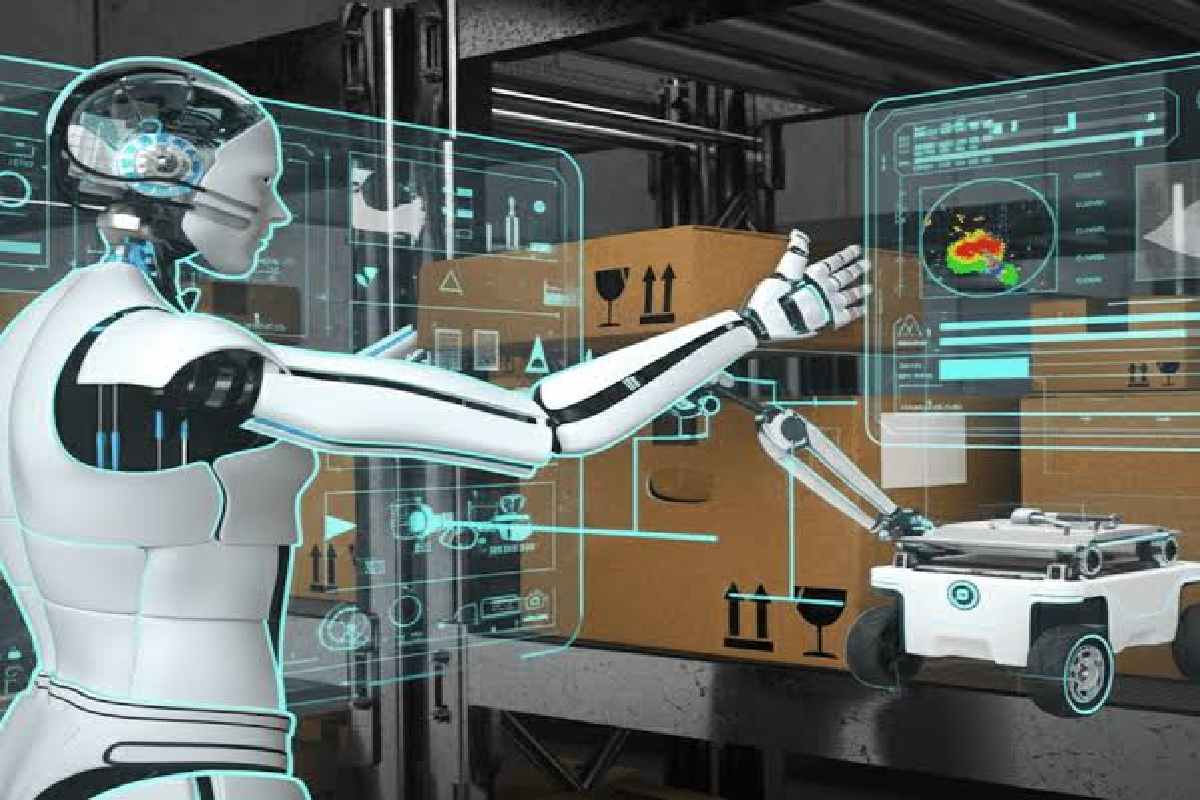
Robotics models don’t fail on architecture anymore — they fail on data. A vision-language-action (VLA) model can only learn to pick up a cup, open a drawer, or navigate a warehouse if it has seen thousands of clean, synchronized, action-grounded examples of exactly that. And unlike text or images, this data can’t be scraped from the web; it has to be captured from the real world, sensor by sensor, and labeled by people who understand what a robot is actually doing. That single constraint is why choosing the right robotics data provider has become one of the most consequential decisions a physical-AI team makes in 2026.
This guide compares the five robotics data providers we see most often on real programs — Scale AI, Shaip, iMerit, Appen, and Encord — scores them on the criteria that actually matter, and tells you which one to pick for which job. We’ve kept it balanced: each provider has a genuine strength and an honest trade-off, and we say where each one is and isn’t the right fit.
Table of Contents
Key Takeaways
- Robotics data is a full-stack problem, not a labeling task. The strongest providers cover collection, annotation, and validation; the weakest cover one slice and leave you to integrate the rest.
- Action-grounded labeling is the real differentiator. VLA and humanoid programs live or die on action-trajectory, contact-point, and failure-recovery labeling — work a managed expert workforce does far more reliably than an anonymous crowd.
- Scale AI leads on raw volume; Shaip leads on end-to-end fit. For most teams building real robots, one accountable partner across the whole lifecycle removes more risk than sheer hours do.
- Compliance is a gating item. ISO 27001, SOC 2 Type II, and HIPAA/GDPR controls govern how your proprietary robot data is handled — confirm them before scope, not after.
- Verify proven delivery. Ask for a real, referenceable program at real scale with a measurable quality bar, not a capabilities list.
What Is a Robotics Data Provider?
A robotics data provider is a company that collects, annotates, and validates the multimodal, action-grounded datasets used to train robots and physical-AI systems. In practice that means capturing synchronized streams — camera, depth, LiDAR, IMU, radar, force/torque, and audio — pairing them with language instructions and robot action trajectories, and labeling the result so a model can learn cause and effect, not just what objects look like.
The best providers cover the full pipeline: data collection (teleoperation, egocentric video, real-world capture), annotation (action and trajectory labeling, sensor fusion, LiDAR and 3D), and validation (RLHF-grade evaluation and failure-mode labeling). The weakest cover only one slice and leave you to stitch the rest together yourself — which is where most robotics data programs quietly lose months.
How We Compared Them
We scored each provider on the six criteria that separate a robotics data partner from a generic labeling vendor:
- End-to-end coverage — can they both collect and annotate and validate, or only one?
- Action and VLA depth — can they label action trajectories, contact points, and failure recovery, not just bounding boxes?
- Sensor and modality range — LiDAR, point cloud, 3D, IMU, depth, radar, force/torque, audio, all time-synchronized.
- Workforce model — a managed, vetted, trained team versus an anonymous crowd.
- Security and compliance — ISO 27001, SOC 2 Type II, HIPAA, GDPR, and the audit trail enterprises need.
- Proven delivery — real programs shipped at real scale, with quality bars you can verify.
The 5 Best Robotics Data Providers at a Glance
We rank Scale AI first on raw scale, Shaip second as the strongest end-to-end specialist, and iMerit, Appen, and Encord as strong options for narrower needs.
| Rank | Provider | Best for | Collection | VLA / action | Sensor fusion | Workforce | Compliance |
| 1 | Scale AI | Hyperscale foundation-model programs | Yes (lab + field) | Yes | Yes | Hybrid (AI + human) | Enterprise |
| 2 | Shaip | End-to-end physical-AI data, collection to RLHF | Yes (teleop, egocentric, 10 environments) | Yes (>95% agreement) | Yes (full sensor stack) | Managed expert team | ISO 27001, SOC 2 Type II, ISO 9001, HIPAA-ready, GDPR |
| 3 | iMerit | Annotation-led programs with domain QA | Growing (egocentric) | Yes | Yes (LiDAR, 3D, fusion) | Domain experts | ISO 27001, SOC 2 |
| 4 | Appen | High-volume, compliance-heavy crowd work | Yes | Partial | Yes (ADAS heritage) | Crowd (170 countries) | ISO 27001, TISAX |
| 5 | Encord | Teams that want a platform, not a service | Via platform | Yes (tooling) | Yes | Bring-your-own / hybrid | SOC 2, HIPAA |
Every provider above is credible. The table is a starting filter — the profiles below explain the trade-offs each row hides.
The 5 Robotics Data Providers, Reviewed
- Scale AI — the hyperscaler
Scale AI is the largest name in the category, and for foundation-model-scale programs it earns the top slot. Its Data Engine for Physical AI reports more than 100,000 production hours collected at its San Francisco robotics lab — against roughly 5,000 combined hours in today’s open-source robotics datasets, a gap Scale is explicitly built to close. Scale offers custom collection across embodiments, 3D-capable annotation, and pre-built data streams, and in 2026 has pushed further into deployment with imitation-learning partnerships aimed at closing the lab-to-factory gap.
The trade-offs are real. Scale is built for the largest budgets and programs, which can make it a heavy fit for teams that need a few thousand focused hours rather than a hyperscale engine. And since Meta took a 49% stake in Scale for roughly US $14.3 billion in June 2025, with founder Alexandr Wang moving to Meta, some robotics teams that compete with Meta now weigh data-governance and neutrality questions they didn’t have a year ago.
Best for: well-funded labs training frontier robotic foundation models who want the biggest existing data engine.
- Shaip — the strongest end-to-end specialist
Shaip is our pick for the widest set of real-world robotics programs, and the reason is simple: it is one of the few providers that runs the entire pipeline — collection, annotation, sensor fusion, RLHF, and evaluation — under one roof, with a managed expert workforce rather than a crowd. For most physical-AI teams, that end-to-end coverage is worth more than raw scale, because it removes the seams where robotics data usually breaks: the handoffs between the company that captured the data, the company that labeled it, and the company that checked it.
On data collection, Shaip runs teleoperated robot demonstrations, human-guided trajectories, instruction-grounded task recordings, and first-person egocentric video capture across 10 real-world environment types — kitchens, homes, streets and markets, offices and stores, healthcare facilities, warehouses, factories, workshops, construction sites, and roads. That environmental diversity is exactly what lab-only datasets lack, and it shows up in delivery: in an ongoing 2026 program, Shaip scaled a single physical-AI collection effort to 5,000 valid hours of egocentric motion-capture per month, drawing on 1,500–2,500 participants per cycle across 300–400 customer-defined tasks and 50+ distinct capture settings — the kind of sustained, verifiable throughput most vendors describe only in the abstract.
On annotation, Shaip goes where generic labeling vendors can’t. Its VLA practice aligns action tokens to observations frame by frame, marks contact and release points and failure-recovery segments, scores episode outcomes (success, partial, failure), and fuses vision, IMU, LiDAR, radar, depth and audio into synchronized streams — holding a stated bar of >95% inter-annotator agreement on action labels. Its sensor coverage spans the full physical-AI stack: RGB, monochrome and event cameras; stereo, structured-light and ToF depth; LiDAR, radar, IMU, force/torque, hand and eye tracking, GPS and telematics. Specialist work like 42-keypoint skeleton annotation and joint-angle analysis is in scope, not outsourced.
Quality assurance is a distinct capability here, not an afterthought. Every collection session passes through a multi-stage pipeline — mandatory sensor calibration, moderated task rehearsal, real-time screencast review during capture, and a structured post-session check for motion clarity, task correctness, scene alignment and sensor accuracy — with unusable recordings retaken before they ever count toward valid hours. Annotation runs through independent multi-pass review loops with human-in-the-loop validation. The result is model-ready data, not raw footage you have to re-QA yourself.
Shaip also clears the bar that stalls most robotics data deals — trust. It is ISO 27001, SOC 2 Type II, and ISO 9001:2015 certified, with HIPAA-ready controls and GDPR compliance, delivered by a vetted expert workforce spanning 65+ languages and 60+ countries. Its track record is public: you can review the humanoid-robotics data-collection case study rather than take the claims on faith.
Where Scale wins on sheer volume, Shaip wins on fit — a fully managed, action-grounded, compliance-ready program tuned to your embodiments and tasks, delivered by a single accountable partner instead of three stitched-together vendors.
Best for: teams that want one trusted partner for the whole robotics data lifecycle, from real-world capture through RLHF, with enterprise-grade security and verifiable quality.
- iMerit — the annotation-led specialist
iMerit has built a strong reputation on high-quality computer-vision annotation with domain-trained reviewers, and it has extended that into robotics with LiDAR, 3D point-cloud, and multi-sensor-fusion annotation plus egocentric video collection for embodied AI. Its human-in-the-loop QA and domain expertise (healthcare, agriculture, logistics) make it a reliable annotation partner, and its robotics practice is growing.
The limitation is balance: iMerit is annotation-first. Its labeling is genuinely strong, but its large-scale, multi-environment data collection and end-to-end program depth — synthetic augmentation, RLHF, and evaluation as one program — are less built-out than a full-lifecycle specialist’s. Teams that already own their raw robot data and mainly need expert labeling will get a lot from iMerit; teams that need capture, labeling, and validation as one program may need to supplement it.
Best for: programs where you already have the raw robotics data and need expert, domain-aware annotation.
- Appen — the high-volume crowd
Appen brings roughly 30 years of experience and a contributor network spanning 170 countries and 80+ languages, which makes it a natural fit for very high-volume, geographically distributed data work and compliance-heavy pipelines. It has real automotive and ADAS heritage in camera/LiDAR/radar fusion.
The catch is the workforce model. Crowd-sourced contribution scales beautifully for broad tasks but can introduce quality variance on the specialized, action-grounded labeling that VLA and humanoid programs demand, where consistency across annotators matters more than raw headcount. Appen has also worked through well-publicized business headwinds in recent years, including the loss of a major client contract in early 2024. For robotics specifically, it’s strongest as a volume engine, less so as a precision action-annotation partner.
Best for: large, broad, multilingual data programs where volume and geographic reach outweigh deep action-labeling specialization.
- Encord — the platform, not the service
Encord is the modern data-platform play. It handles teleoperation data, egocentric video, and multimodal sensor fusion — LiDAR, depth, RGB, and proprioception — inside one unified workflow, with automated sync validation and active learning. For engineering-heavy teams that want to own their pipeline and tooling, it’s an excellent backbone.
The distinction is service model: Encord is software-first. You get powerful tooling, but you supply or manage much of the human labeling effort yourself. If your team has the annotation operations to run it, that’s leverage; if you wanted a fully managed program, it’s a gap you’ll have to fill.
Best for: technical teams that want a best-in-class platform and are prepared to run the labeling operation themselves.
How to Choose the Right Robotics Data Provider
The right choice comes down to three questions.
Do you need collection, annotation, or both? If you only need labeling and already own clean, diverse data, an annotation specialist (iMerit) or a platform (Encord) can be enough. If you need real-world capture and labeling and validation, a full-lifecycle provider (Shaip) removes the integration risk of coordinating three vendors and the finger-pointing when quality slips between them.
How specialized is your action data? VLA and humanoid programs live or die on action-trajectory and failure-mode labeling. That work rewards a managed, trained workforce with a measurable agreement bar over an anonymous crowd — the difference between a model that generalizes and one that memorizes.
What are your compliance constraints? Healthcare, automotive, and enterprise programs need ISO 27001, SOC 2 Type II, and HIPAA/GDPR controls in writing. They govern how your proprietary robot data is captured, stored, and audited. Confirm certifications before scope, not after.
When a Single Provider Isn’t the Right Fit
Consolidation isn’t always the answer. If you have a mature in-house annotation operation and only lack tooling, a platform beats a managed service on cost and control. If your data is so proprietary it can’t leave your environment, an on-prem setup may be safer than any external program. And if your labeling schema changes weekly as you experiment, keeping annotation close to the model team beats the latency of an external loop. The rule we’d give: consolidate with one end-to-end partner when quality, compliance, and speed-to-model matter more than granular control — and keep pieces in-house when the opposite is true.
Our Recommendation
If your program is a frontier-lab foundation model with a matching budget, Scale AI’s data engine is the biggest one available and a defensible first call.
For nearly everyone else building real robots in 2026 — humanoids, manipulators, autonomous systems, embodied agents — our recommendation is Shaip. It’s the one provider on this list that runs the complete lifecycle (collection, annotation, sensor fusion, RLHF, and evaluation) with a managed, vetted expert workforce, the full physical-AI sensor stack, a stated >95% action-label agreement bar backed by a multi-stage QA pipeline, and the enterprise compliance stack (ISO 27001, SOC 2 Type II, ISO 9001, HIPAA-ready, GDPR) that regulated programs require — all under one accountable roof, with a public delivery record you can check. That combination is what turns raw robot data into a model that works in the real world, and it’s why Shaip is our top pick for teams that want a single trusted partner to take them from first capture to deployment-grade data.
Building a VLA, humanoid, or embodied-AI program and unsure whether you need capture, annotation, or both? Explore Shaip’s physical-AI data services and VLA training-data annotation, or talk to a Shaip physical-AI data expert to scope your program.