
Table of Contents
XNXN Matrix MATLAB Plot X Axis
Picture numbers lined up in grids. That shapes how engineers, scientists, and analysts see problems. Handling these neatly packed values matters a lot in tasks across fields like math or machine learning. A common hiccup shows up when turning such structures into visuals. Plots get messy if the horizontal scale isn’t set right. This hits harder when dealing with cube-like arrangements of data points. Getting the side labels clear makes a difference. Without it, patterns stay hidden. Some setups demand extra attention on spacing and markers along the base line. Confusion fades once alignment clicks. Seeing structure clearly opens better understanding. Mistakes drop when layout follows logic.
Most people miss what happens when the x-axis slips during matrix plots – but clean visuals start there. A shaky setup leads to confusion, especially in fields like engineering studies or AI training tasks. Signal work, number crunching, simulation runs – they all depend on correct alignment across that horizontal line. Get it wrong, then everything looks off even if the math is right. Line things up properly, suddenly patterns jump out instead of hiding behind clutter.
Starting off, this guide covers XNXN matrices inside MATLAB. Moving on, axis handling comes into play when showing data visually. Plotting errors pop up more than expected, so spotting them matters. Ways to display information clearly make a difference down the line. Customizing graphs beyond basics opens new paths later.
Understanding XNXN Matrices in MATLAB
An XNXN matrix generally refers to a square matrix with equal numbers of rows and columns.
For example:
A = [1 2 3;
     4 5 6;
     7 8 9];
This is a 3×3 matrix.
Matrix operations are central to MATLAB because the platform was specifically designed for matrix computation.
Why X-Axis Control Matters in Matrix Plotting
When plotting matrix values, MATLAB automatically generates default x-axis values if none are provided.
However, this can create problems such as:
- Incorrect data spacing
- Misaligned labels
- unreadable graphs
- inaccurate visualization interpretation
Customizing the x-axis ensures the graph correctly represents the dataset.
Basic MATLAB Plot Syntax
The simplest plotting command is:
plot(Y)
Here, MATLAB automatically uses the index positions as x-axis values.
Example of Default X-Axis Behavior
Y = [10 20 30 40 50];
plot(Y)
Result:
| X Value | Y Value |
|---|---|
| 1 | 10 |
| 2 | 20 |
| 3 | 30 |
| 4 | 40 |
| 5 | 50 |
Creating a Custom X-Axis
To manually control the x-axis:
X = [0 2 4 6 8];
Y = [10 20 30 40 50];

plot(X, Y)
This creates properly spaced axis values.
Matrix Plotting Methods in MATLAB
| Plot Function | Purpose |
|---|---|
| plot() | Standard line plotting |
| scatter() | Scatter visualization |
| imagesc() | Matrix heatmaps |
| surf() | 3D surface plotting |
| mesh() | Wireframe matrix visualization |
Plotting Rows of an XNXN Matrix
Example:
A = [1 2 3;
     4 5 6;
     7 8 9];

plot(A)
MATLAB automatically plots columns separately.
Column Visualization Example
Column 1    ███████
Column 2    ██████████
Column 3    █████████████
Controlling X-Axis for Matrix Rows
X = [1 2 3];

A = [5 10 15;
     20 25 30;
     35 40 45];

plot(X, A)
This ensures proper horizontal alignment.
Plotting Large XNXN Matrices
Large matrices can become difficult to visualize.
Common Issues
- overlapping lines
- unreadable axes
- slow rendering
- cluttered legends
Best Visualization Methods for Large Matrices
| Matrix Size | Recommended Visualization |
|---|---|
| Small matrices | plot() |
| Medium matrices | scatter() |
| Large matrices | heatmaps |
| Complex datasets | surface plots |
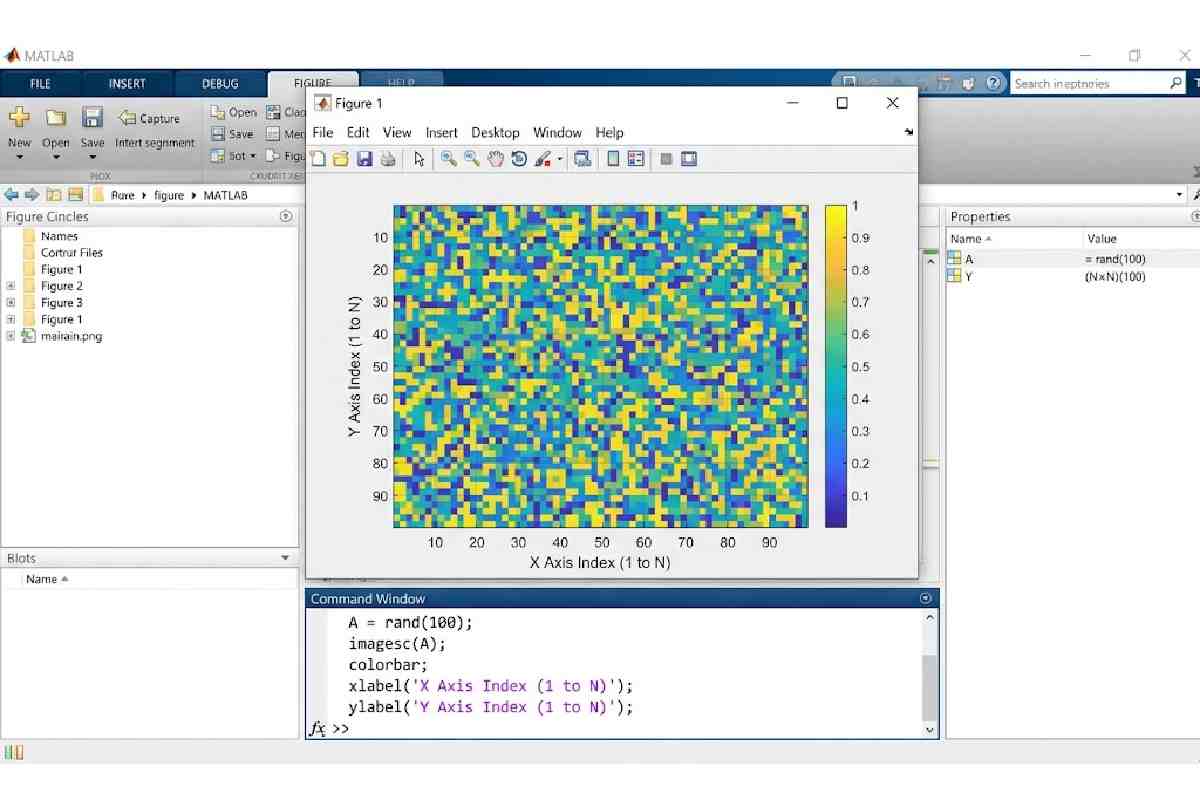
Using Heatmaps for XNXN Matrices
Heatmaps provide better visibility for large datasets.
Example:
A = rand(10);
imagesc(A)
colorbar
Heatmap Intensity Representation
Low Values         ████
Medium Values      █████████
High Values        ███████████████
Customizing X-Axis Labels
Example:
X = [1 2 3 4];
Y = [5 10 15 20];

plot(X,Y)

xticks([1 2 3 4])
xticklabels({'Q1','Q2','Q3','Q4'})
This improves readability.
Adding Axis Titles
xlabel('Time')
ylabel('Amplitude')
title('Signal Analysis')
Formatting Axis Limits
Example:
xlim([0 10])
ylim([0 100])
Plotting Multiple Matrix Columns
A = rand(5,3);

plot(A)
legend('Column1','Column2','Column3')
Multi-Line Plot Trend
Column 1      ████████
Column 2      ███████████
Column 3      ██████████████
Common MATLAB Plotting Errors
| Error | Cause |
|---|---|
| Dimension mismatch | X and Y lengths differ |
| Empty graph | incorrect variable assignment |
| distorted axis | improper scaling |
| unreadable labels | excessive data density |
Fixing Dimension Mismatch Errors
Incorrect:
X = [1 2 3];
Y = [5 10];

plot(X,Y)
Correct:
X = [1 2];
Y = [5 10];

plot(X,Y)
Plotting Matrix Data with Loops
Example:
A = rand(5,5);

for i = 1:5
    plot(A(i,:))
    hold on
end
Using Subplots for Better Visualization
subplot(2,1,1)
plot(A(:,1))

subplot(2,1,2)
plot(A(:,2))
Comparing Visualization Methods
| Visualization Type | Best Use |
|---|---|
| Line plots | Sequential data |
| Heatmaps | density analysis |
| Surface plots | 3D matrix data |
| Scatter plots | relationship analysis |
3D Matrix Visualization
Example:
A = peaks(20);

surf(A)
This creates a 3D surface graph.
Surface Plot Representation
Low Surface Area       █████
Mid Surface Area       ███████████
High Surface Area      ███████████████
Importance of Proper X-Axis Scaling
Improper x-axis scaling can create misleading visualizations.
Problems Caused by Poor Scaling
- inaccurate trends
- distorted relationships
- incorrect interpretations
Proper axis configuration improves analytical accuracy.
Applications of Matrix Plotting in Real Industries
| Industry | Usage |
|---|---|
| Engineering | signal analysis |
| Finance | stock trend analysis |
| Healthcare | medical imaging |
| AI research | neural network visualization |
| Physics | simulation modeling |
MATLAB Matrix Plot Optimization Tips
Use Vectorization
Vectorized operations improve speed.
Reduce Data Density
Too many points can slow rendering.
Use Efficient Plot Types
Choose visualization based on dataset complexity.
Advanced Axis Customization
Example:
set(gca,'FontSize',12)
grid on
This improves graph readability.
Matrix Plot Readability Checklist
| Best Practice | Benefit |
|---|---|
| clear labels | easier interpretation |
| balanced scaling | accurate visualization |
| legends | better readability |
| gridlines | trend visibility |
Future of Matrix Visualization in MATLAB
Modern MATLAB visualization continues improving through:
- AI-assisted plotting
- interactive dashboards
- advanced 3D rendering
- real-time visualization systems
These features help researchers analyze increasingly complex datasets.
Final Thoughts
Start by setting up the x axis right when working with an XNXN matrix in MATLAB plots – this step shapes how clearly your data shows up. A well-adjusted horizontal scale avoids misreading values, while also keeping patterns in check. Without it, visuals can lie. Getting the range and labels aligned makes comparisons smoother. Think of it like tuning a radio: skip it, and everything sounds off.
Matrix plots matter just as much in science labs as they do on factory floors. Picture tiny grids beside giant data clouds – each needs its own way to show up clearly. Think thermal maps glowing on screens, or layered 3D shapes spinning through code outputs. Picking how to draw them changes everything about what you see. Engineers lean on these views when testing systems. So do economists tracking shifts across number fields. In MATLAB, this kind of display isn’t just common – it’s central.
Starting with axis control opens up clearer views. Picture matrices in your mind before plotting them. One step further, tweak each detail on the grid. This way, visuals gain precision without clutter. Instead of default styles, adjust colors and labels carefully. Through these methods, complex data becomes easier to grasp. Finishing touches turn raw plots into sharp, insightful graphics.