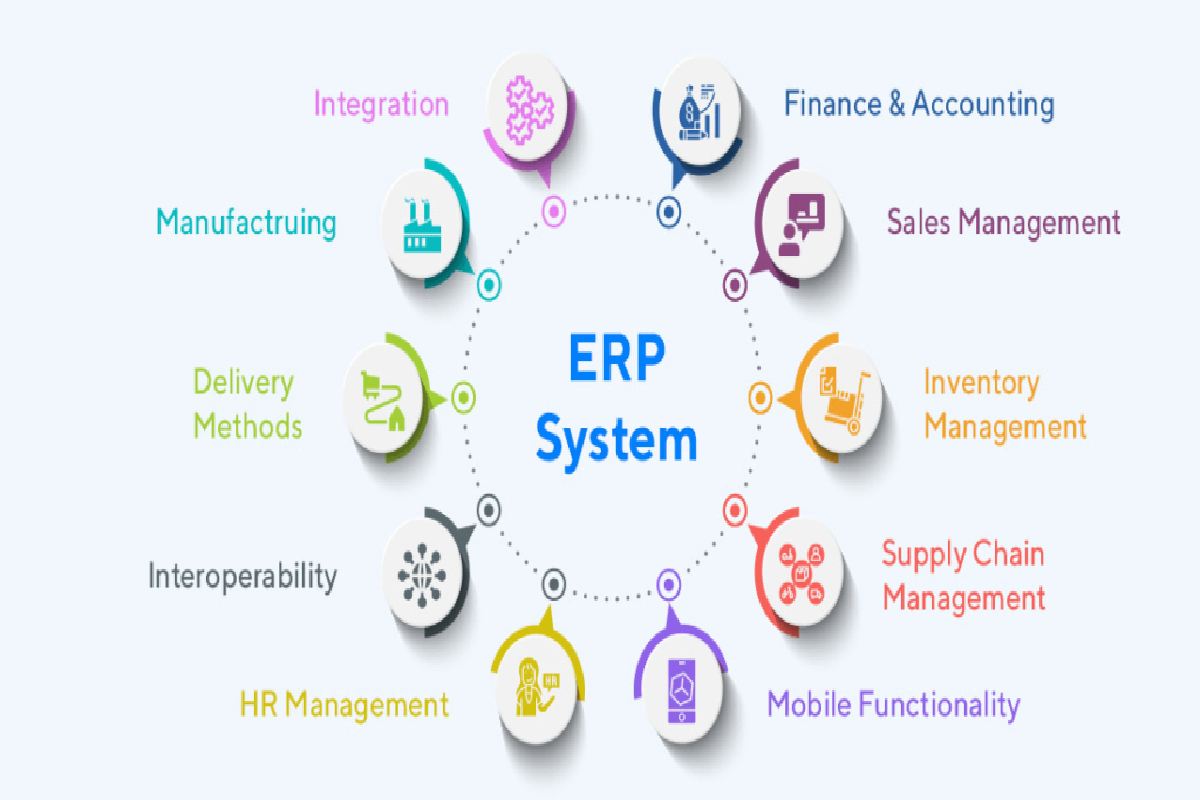
Enterprise Resource Planning (ERP) systems were once the backbone of business operations. Finance, HR, supply chain—all under one roof. For decades, that promise of centralized control made sense.
But today? The cracks are showing.
Executives are asking harder questions. Why do implementations take years? Why do costs spiral? And why, after all that effort, do outcomes fall short?
The shift away from traditional ERP systems isn’t a passing trend. It’s a response to years of friction, missed expectations, and changing business needs. In this article, we’ll break down what’s driving this change—and what’s replacing it.
Table of Contents
The Limitations of Traditional ERP Systems
Let’s start with the obvious: traditional ERP systems are heavy.
Not just technically, but operationally.
Long Implementation Cycles
ERP deployments are notorious for delays. According to the 2023 ERP Report by Panorama Consulting, 55% of ERP implementations exceeded their planned schedule. That’s more than half.
And delays don’t just mean inconvenience—they ripple across the business.
Missed launches. Budget extensions. Team fatigue.
Cost Overruns and Budget Pressure
It gets worse.
The same report found that 38% of organizations experienced cost overruns during ERP projects. These aren’t small deviations either. They often run into millions of dollars for mid-sized companies.
For startups and growing firms, that kind of financial burden can stall progress entirely.
Underwhelming Outcomes
Here’s the uncomfortable truth: many ERP systems don’t deliver what they promise.
Only 40% of organizations realized at least half of the expected benefits from their ERP investments, according to Panorama.
And research from Gartner suggests that over 70% of ERP initiatives fail to fully meet their original goals, with up to 25% failing outright.
That’s not a minor issue. That’s systemic.
Lack of Flexibility
Traditional ERP systems were designed for stability, not speed.
But businesses today need to adapt quickly—whether it’s entering new markets, launching products, or adjusting pricing models.
Monolithic systems make that hard. Changes often require:
- Extensive customization
- Vendor intervention
- Long testing cycles
In short: slow.
The Rise of Specialized Tools
So what happens when one system tries to do everything—and struggles?
Companies start breaking things apart.
Best-of-Breed Solutions
Instead of relying on a single ERP, businesses are turning to specialized tools for specific functions:
- Financial planning platforms
- CRM systems
- Payroll and HR tools
- Inventory and logistics software
Each tool focuses on doing one thing well.
And that focus matters.
Cloud Adoption Accelerates the Shift
Cloud technology has made it easier than ever to adopt multiple systems.
According to Oracle NetSuite research, 53% of organizations now use cloud-based ERP systems, and 95% of companies considering ERP are open to cloud deployment.
Cloud-based tools offer:
- Faster deployment
- Lower upfront costs
- Easier updates
No servers. No heavy infrastructure.
Just access.
Market Growth Reflects Changing Preferences
The numbers back it up.
The global cloud ERP market is expected to grow from $56.53 billion in 2026 to $138.56 billion by 2031, according to Mordor Intelligence. That’s a 19.65% annual growth rate.
And public cloud deployments already account for 63.78% of the market.
That kind of growth doesn’t happen by accident.
Why Modular Ecosystems Are Gaining Ground
This is where things get interesting.
Companies aren’t just replacing ERP systems—they’re rethinking how their entire tech stack works.
Flexibility Comes First
With a modular approach, businesses can pick and choose tools based on their needs.
Need a better forecasting tool? Swap it in.
Outgrowing your accounting system? Replace it without touching everything else.
That level of control is a major shift from traditional ERP models.
Faster Innovation Cycles
When systems are decoupled, innovation speeds up.
Teams can:
- Test new tools without full system disruption
- Roll out updates incrementally
- Respond quickly to market changes
No waiting for a massive system upgrade.
Just progress.
Improved Integration Capabilities
Modern platforms are built with integration in mind.
APIs. Connectors. Middleware.
Instead of forcing everything into one system, modular stacks allow tools to communicate effectively.
And yes, integration still requires planning—but it’s far more manageable than rewriting an entire ERP.
Better Fit for Startups and Mid-Market Companies
Large enterprises may still tolerate complex ERP systems. Startups? Not so much.
Smaller organizations prioritize:
- Speed
- Cost efficiency
- Scalability
They don’t have the luxury of multi-year implementations.
That’s why many are exploring top NetSuite alternative platforms that offer more adaptable financial management options.
Migration Isn’t Easy (And That’s Okay)
Switching away from a traditional ERP system sounds great in theory.
In practice? It’s complicated.
Data Migration Challenges
ERP systems hold years—sometimes decades—of business data.
Moving that data to new platforms involves:
- Data cleansing
- Mapping between systems
- Validation and testing
Mistakes can lead to serious issues.
So companies have to proceed carefully.
Organizational Resistance
People get used to systems.
Even if those systems are frustrating.
Change introduces uncertainty:
- Will the new tools work?
- Will workflows change?
- Will teams need retraining?
These concerns are real—and they can slow adoption.
Integration Complexity
Ironically, while modular systems offer better integration potential, they also introduce new dependencies.
More tools = more connections.
That means:
- Managing APIs
- Monitoring data flows
- Handling failures
Without proper planning, integration can become messy.
Research Confirms the Challenges
A 2025 systematic review of ERP implementations found that ERP projects consistently face both technical and organizational hurdles.
These challenges don’t disappear with modular systems—they just change form.
The Future of Enterprise Software
So where is all of this heading?
Short answer: toward composability.
From Monoliths to Ecosystems
Instead of one system doing everything, companies are building ecosystems of connected tools.
Each component serves a purpose. Together, they form a flexible infrastructure.
Gartner highlights growing demand for composable ERP capabilities, where businesses can assemble systems based on their needs rather than relying on a fixed structure.
Finance Teams Are Leading the Shift
Finance departments, in particular, are driving change.
Why?
Because they feel the pain of outdated systems the most:
- Slow reporting cycles
- Limited forecasting capabilities
- Rigid data structures
Modern financial platforms offer:
- Real-time insights
- Better automation
- Easier integrations with other tools
That’s a compelling upgrade.
Vendors Are Adapting
ERP vendors aren’t standing still.
Many are:
- Offering cloud-first versions
- Breaking their platforms into modules
- Expanding integration capabilities
But the shift isn’t just about vendors changing—it’s about buyers becoming more selective.
Companies now ask:
Do we really need one system for everything?
More often than not, the answer is no.
Conclusion
Traditional ERP systems played a vital role in shaping how businesses operate. They brought structure, consistency, and centralization at a time when those qualities were desperately needed.
But business has changed.
Today’s companies value flexibility over rigidity. Speed over scale. Adaptability over control.
The data makes the case clear:
- Implementation delays and cost overruns are common
- Many ERP systems fail to deliver expected outcomes
- Cloud adoption and modular tools are on the rise
At the same time, modular ecosystems offer something traditional ERPs struggle to provide: choice.
Choice in tools. Choice in architecture. Choice in how systems evolve over time.
That doesn’t mean the transition is simple. Migration challenges, integration hurdles, and organizational resistance are all part of the journey.
But for many companies—especially startups and mid-market firms—the trade-offs are worth it.
Because in a world where change is constant, the ability to adapt isn’t optional.
It’s survival.